Guide for organizers
Attendee transport emissions
When an event properly measures its carbon footprint, it almost always finds the same thing: attendee transport outweighs every other category, including energy, catering and waste combined.
It's the biggest part of the problem — and also the one that responds fastest to a well-designed reduction plan.
Why attendee transport is an event's biggest source of emissions
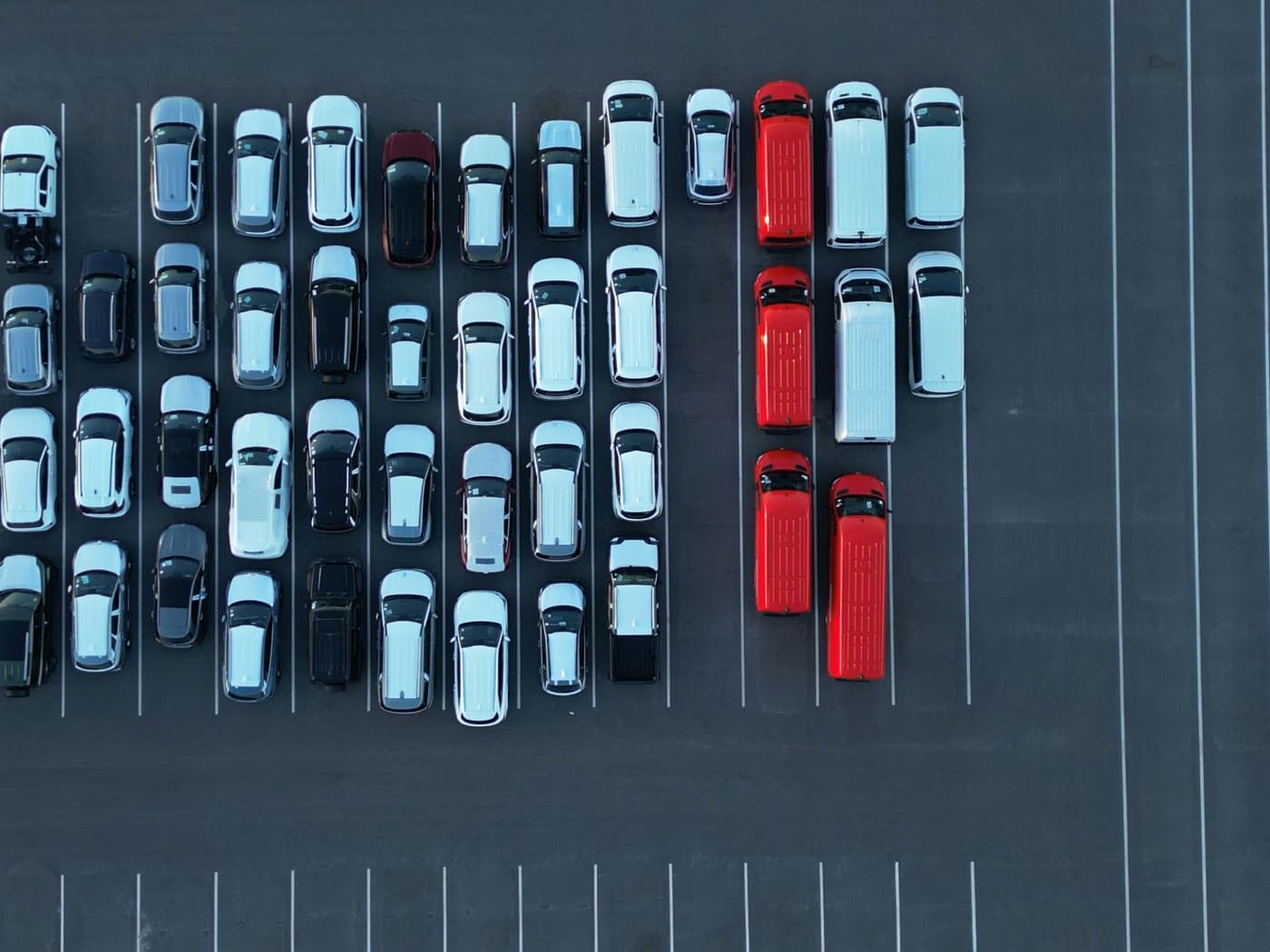
An event moves thousands of people to the same point within a few hours — usually by private car and at low occupancy (1-2 people per vehicle if nothing is done to change it). That travel pattern is, by design, inefficient.
Unlike venue energy or catering, which an organiser can control directly (choosing a supplier, a renewable energy contract), transport depends on a decision each attendee makes separately. That's why it's usually the hardest category to reduce without a tool that coordinates those individual decisions.
How your audience's transport emissions are calculated
The calculation combines three data points per attendee (or, more realistically, per representative sample): distance travelled from their origin, transport mode used, and vehicle occupancy if travelling by car.
The hardest piece to get is usually real vehicle occupancy — without real trip data, most calculations assume a generic average occupancy (1.5 people per car is a common figure) that rarely reflects what actually happens at a specific event.
When a carpooling platform is active at the event, that part of the calculation stops being an estimate: it can be measured directly from real trips posted and completed.
A plan to reduce transport emissions
A transport emissions reduction plan that actually works relies on a few measures applied consistently edition after edition, rather than many one-off actions:
- Set a measurable target (e.g. raise average vehicle occupancy by X% versus the previous edition) instead of a generic goal to "reduce emissions".
- Activate carpooling early enough that attendees factor it into how they decide to arrive, not as a last-minute option.
- Reinforce public transport or shuttles at the peak-demand time slots identified from the previous edition's data.
- Measure the real outcome (shared kilometres, cars avoided, CO₂ reduced) and compare it against the target you set at the start — not just against the previous edition in the abstract.
Carpooling's role in your reduction plan
Carpooling is the fastest transport-emissions reduction measure to activate because it doesn't depend on contracting new infrastructure or on attendees switching transport mode: it just asks them to share the trip they were already going to make.
With VIB3S, that gets measured from the very first trip posted — shared kilometres and CO₂ avoided, broken down by date — making carpooling the easiest part of a reduction plan to prove with real numbers to a sponsor, a city council, or in the event's sustainability report.
Event types
VIB3S adapts to your type of event
The same mobility and community solution, adapted to the real problem of each sector. Pick yours to see its specific case.
Want an emissions reduction plan backed by real data?
We'll show you how to measure the CO₂ avoided through shared transport at your next event.