Guide for organizers
Attendee transport for events
Attendee transport is the part of an event's mobility that shows most clearly when it fails: queues of cars at access points, parking full before doors even open, people arriving late because they couldn't find a way to get there.
And it's almost always the least planned part — organisers assume every attendee will sort out their own trip, until capacity proves otherwise.
How attendees get to an event today (and why it fails)
With no transport strategy at all, most attendees default to a private individual car, especially if the venue isn't in a city centre with good metro or commuter rail coverage.
The problem isn't that people use cars — it's that they use them with zero coordination: thousands of vehicles carrying one or two people each, converging on the same point in the same time window, when that same movement could happen with a fraction of those cars.
Transport options: public, shared and private
Most events need to combine several transport options, not pick just one:
- Public transport: the most efficient option where there's a direct connection to the venue, but not enough on its own for peripheral or high-capacity venues.
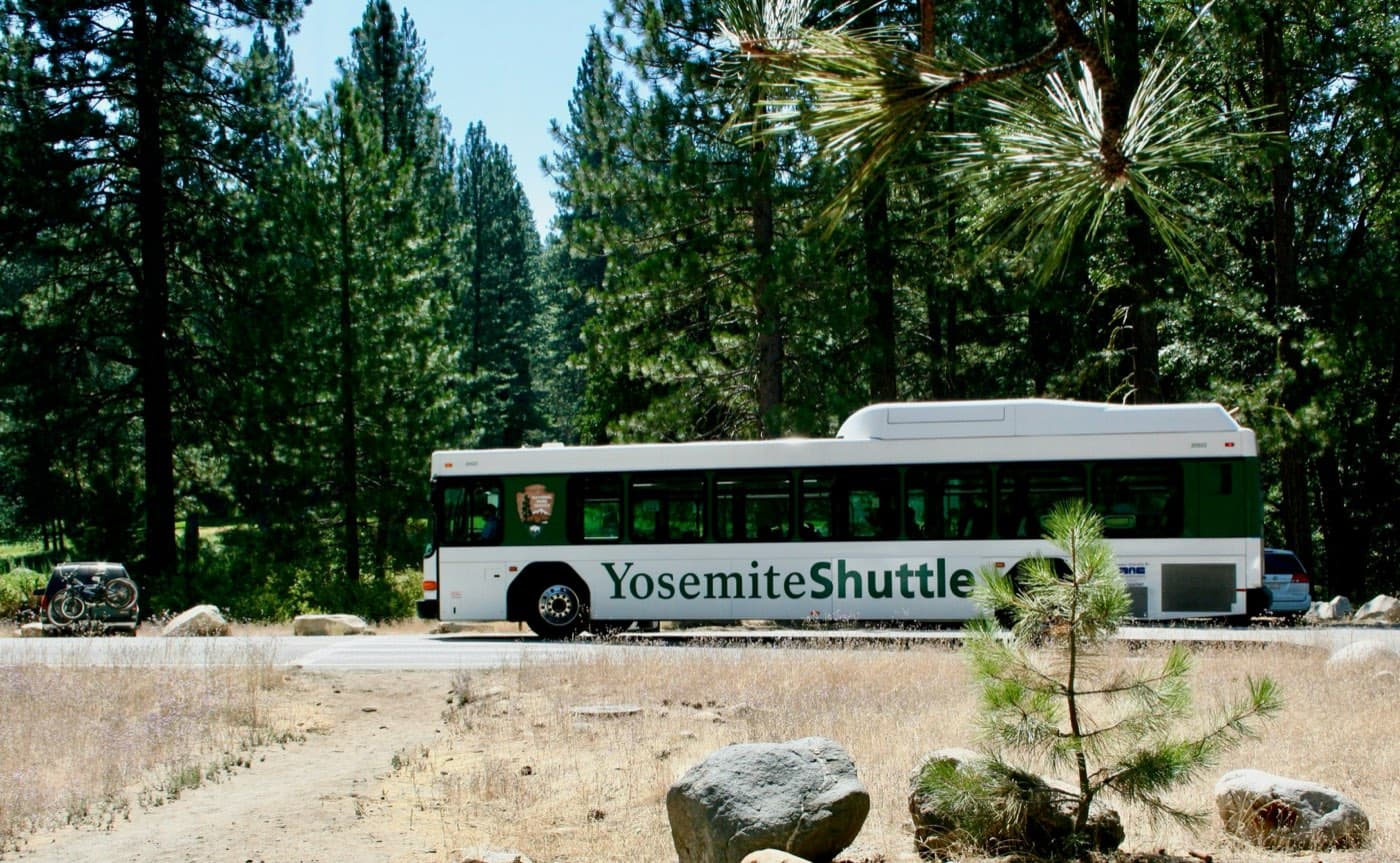
- Contracted shuttles: cover specific legs with no public transport, usually from points in the city with a good connection to the centre.
- Carpooling: covers the demand neither public transport nor shuttles reach — especially attendees coming from outside the city or from poorly connected areas — and reduces the total number of vehicles arriving on their own.
- Private individual car: inevitable to some extent, but the only option that doesn't scale well with capacity unless combined with the others.

How to size transport by capacity and attendee profile
The transport you need isn't calculated from total capacity alone, but from your audience's origin profile: an event with a very local audience needs less long-distance transport than one that draws people from a whole region.
The more attendees come from outside the city, the more carpooling matters relative to shuttles: a shuttle is only cost-effective if it concentrates demand at a fixed departure point, which doesn't happen when the audience comes from dozens of different towns.
How to activate shared transport with VIB3S in under 24 hours
Unlike a shuttle or extra public transport, which require contracting and lead time to coordinate, carpooling with VIB3S activates without depending on third parties: the organiser lists their event and their attendee community is ready to post and search for trips, through the app and the web widget.
No prior infrastructure or negotiation with a transport provider needed: it's the piece that can be added to a mobility plan even after everything else is already decided, and it keeps working date by date across multi-day events.
Event types
VIB3S adapts to your type of event
The same mobility and community solution, adapted to the real problem of each sector. Pick yours to see its specific case.
Need to sort out your attendees' transport?
Tell us your capacity and audience origin and we'll show you how carpooling fits your event.