Guide for organizers
Event mobility plan
A mobility plan is the document that defines how everyone gets to, moves around and leaves your event: attendees, staff, suppliers and emergency vehicles.
It's not a paperwork exercise: it's what decides whether your access points collapse at doors-open time, or whether your parking area runs out of space by mid-afternoon. The bigger the capacity, the more expensive it gets to improvise it on the day.
What an event mobility plan is and why you need one
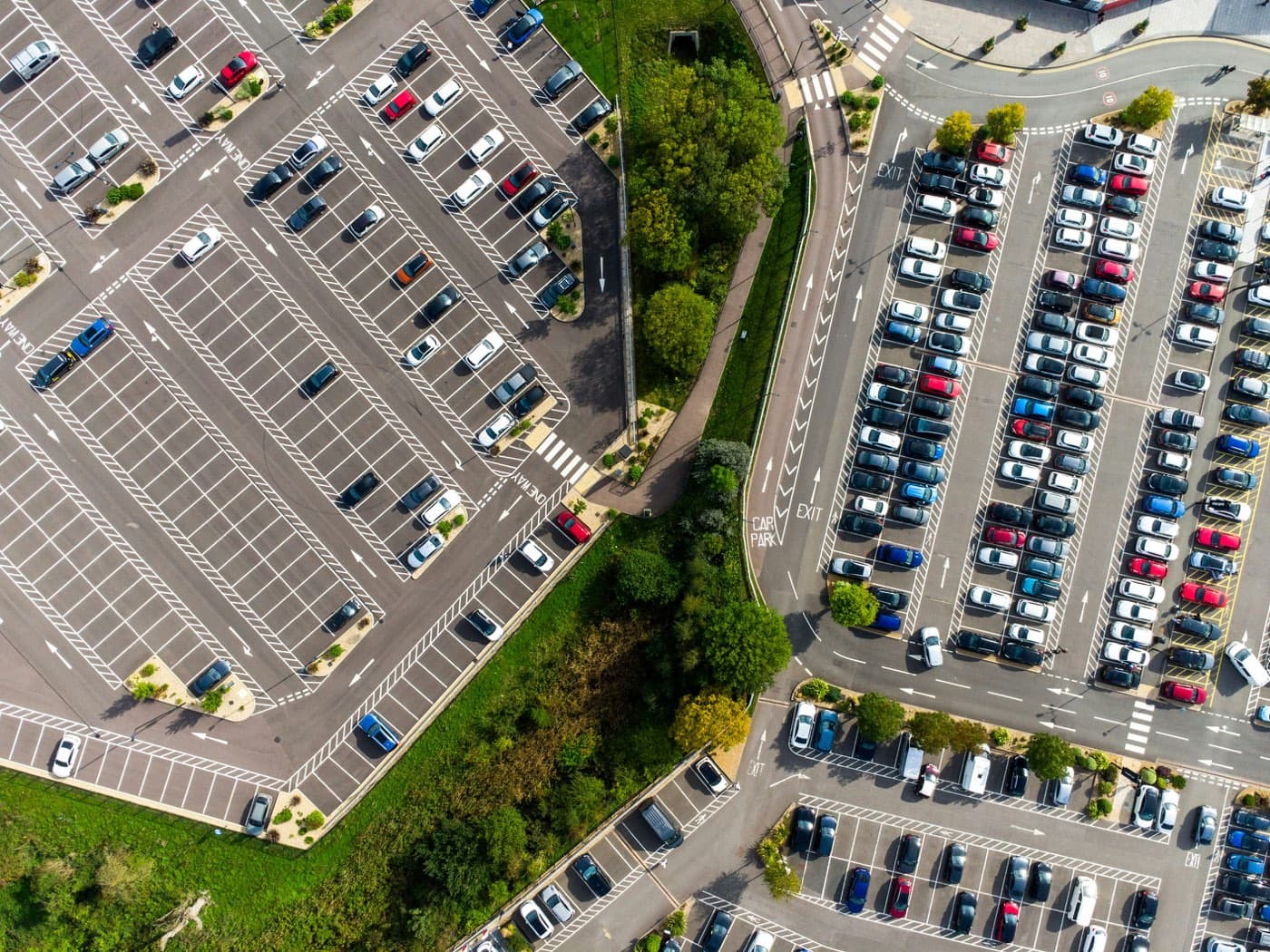
An event mobility plan sets out, before the first ticket goes on sale, how your audience will arrive (car, public transport, on foot, carpooling), how many parking spaces you actually need, which time slots will put the most pressure on access points, and what official transport (shuttles, buses) you need to contract.
Without that document, mobility gets decided by default: every attendee chooses how to arrive with no coordination at all, and the organiser finds out parking isn't enough on the day of the event itself, when there's no room left to react.
It's especially critical for newly built venues or venues on the outskirts of a city, where there's no already-proven transport infrastructure to absorb the arrival peak.
Phases of a mobility plan: before, during and after the event
A mobility plan works in three blocks, and each one needs different data:
- Before: estimate capacity and audience profile, calculate the real capacity of access points and parking, decide the transport mix (public transport, shuttles, carpooling) and communicate it early enough for attendees to plan how they'll arrive.
- During: coordinate entry and exit flow in real time, manage traffic restrictions around the venue, and have a channel to solve unexpected issues (street closures, delays, one access point getting overloaded).
- After: measure what actually happened — how many people used each transport mode, how long it took to clear the venue, which access points got saturated — to fix it for the next edition or date.
How to choose the right transport model by event type and capacity
There's no single transport model that fits every event: it depends on capacity, on whether your audience comes from a concentrated area or a spread-out one, and on how well the venue is connected by public transport.
As a practical rule of thumb: below a few thousand attendees with good metro or commuter rail access, public transport is usually enough. Above that, or at peripheral venues, you need contracted shuttles for the legs public transport doesn't cover, and carpooling to absorb the demand that neither public transport nor shuttles reach — especially attendees coming from outside the city, where no shuttle route goes.
The usual mistake is sizing official transport (shuttles, buses) for average turnout instead of for entry and exit peaks, which are what actually causes the gridlock.
Common mistakes when planning event mobility
The same mistakes repeat edition after edition, across every type of event:
- Calculating parking needs from total capacity, without accounting for average vehicle occupancy (typically 1-2 people per car if nothing is done to change it).
- Not communicating transport options until a few days before the event, by which point attendees have already decided how they're arriving.
- Treating shared transport as something attendees "already sort out on their own" on social media or WhatsApp, instead of giving it an official channel with data the organiser can actually see and plan around.
- Not measuring anything after the event, so each edition repeats the same bottlenecks as the last.
Event types
VIB3S adapts to your type of event
The same mobility and community solution, adapted to the real problem of each sector. Pick yours to see its specific case.
Organizing an event? Let's talk about your mobility plan
Tell us the type of event, capacity and venue, and we'll help you size the shared mobility piece.